

4 Quick Tips to End Political Debates At Thanksgiving Dinner
How do you deal with the relative keeping you from enjoying your feast?

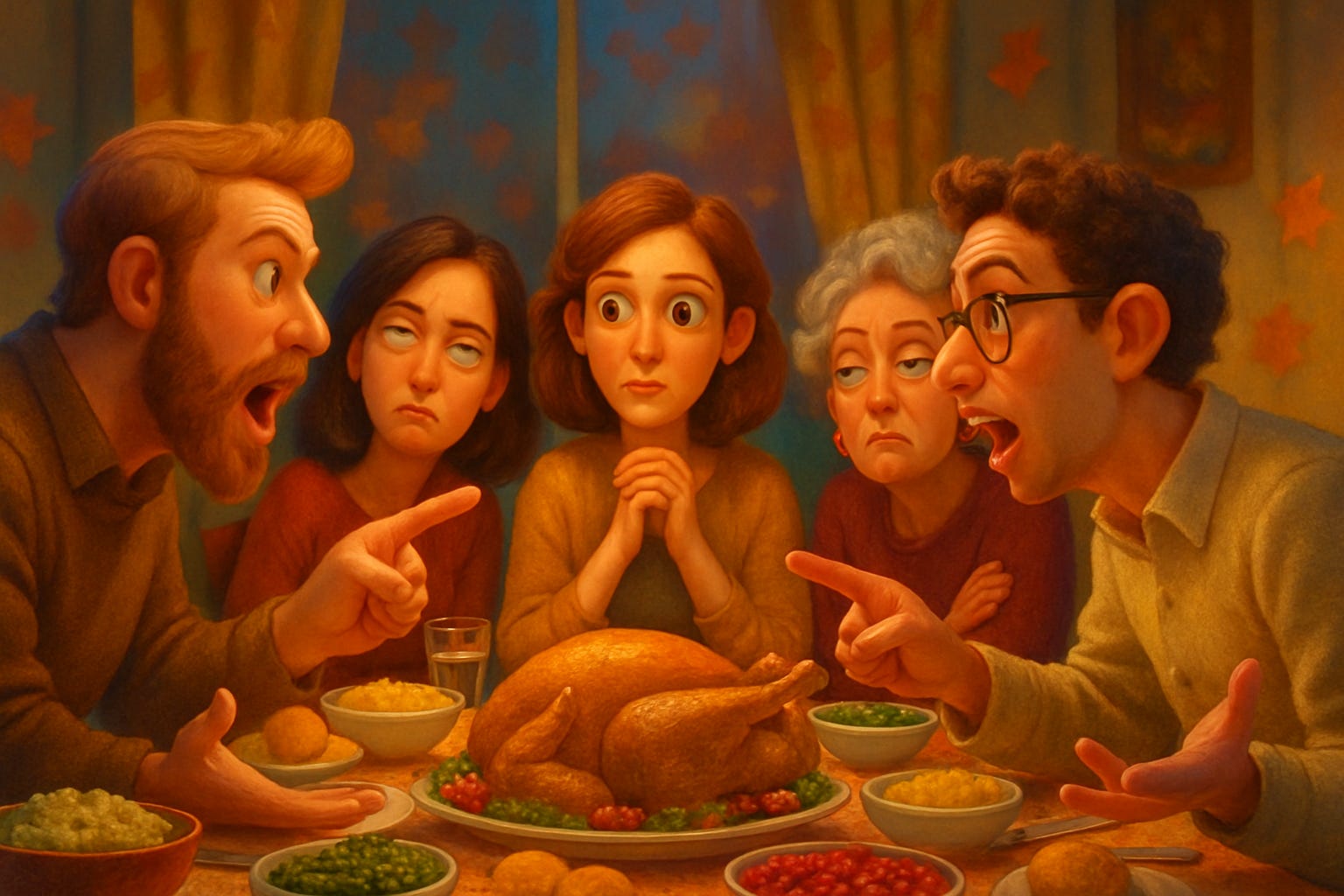
What do you do with that person who will not leave well enough alone? The one who’s just dying to debate you, and the rest of the room is hoping it’ll end quickly so they can enjoy their food comas? The goal in any debate or argument is to target the other person’s weakest claims. Whether you’re at the dinner table or the boardroom or just having beers at the bar, the easiest way to do that is to get their defenses down as much as possible, search for flaws, and strike strategically. And believe it or not, debate is more about listening than talking.
Today’s politics make even a friendly family gathering trickier than it used to be. One study after the 2016 election showed that when people attended Thanksgiving dinner at a home with opposing political views, Americans cut their visits 30-50 minutes shorter. That’s about 74 million hours nationwide.
And let me be clear: I am absolutely not suggesting that you should stand your ground and argue no matter what. Plenty of debates are worth skipping or walking away from. That’s especially if someone is dehumanizing you, making personal insults against you or threatening you. It’s not worth putting a “W” on your record to deal with hate. Walk away. And if you’re in the middle of a discussion that turns cruel, I strongly suggest you back out. You know what they say about wrestling with a pig: the slop leaves you filthy, but the pig has fun.
With that in mind, here are four tips that can help you put a quick, decisive end to holiday debates:
1: DO NOT BICKER.
This may sound strange, but it is vital. Imagine if the argument was something extremely simple: for example, what 2+2 equals. You know it’s 4, but they say it’s 5. What good does getting angry over it do? You might get frustrated, for sure, but what’s the sense in bickering if you are certain that you’re right?
This situation calls for the same level of maturity and calm. If you bicker, then you look defensive, and you signal to the other person that you’re okay with this catfight. Keeping cool, even when you’re annoyed, signals that you know your argument is bulletproof, and you are unbothered. Getting riled up just gives the other person credit for getting to you.
2: ASK PLENTY OF QUESTIONS.
Imagine you’re in a fight, and you come out swinging with your eyes closed. That’s basically what happens when you get into a debate without asking questions. Sure, you’re throwing the strongest punches you have… but where should you aim? Questions help you know where the weaknesses are in the other person’s argument, so you don’t tire yourself out swinging wildly. Thoughtful, brief questions (10 seconds or less) can go a long way.
Keep most of your questions open-ended – use those 5 W’s (who, what, when, etc.) – but “how” may be your best resource. See if the other person can explain their point of view, and you may find weaknesses that you can dig into further. Answering a “how” question requires you to understand how the pieces of an argument fit together. If they’re operating on assumptions or suppositions that don’t line up with reality, that’s where you might notice it.
Be careful with “why” questions: that can sound accusatory, and you don’t want to make the other person any more defensive than they already are. There are other ways to ask, “Why do you think that?” Two examples:
“What’s your thought process on that?”
“How did you come to believe that?”
“Why” feels like disapproval, but alternatives can feel like open-mindedness.
Yes-No questions can be great, but they’re best if the way the person answers adds meaning to their response. When someone asks, “Will you marry me?” how would you prefer they respond:
“YES!!”
“…Yes?”
Same word: vastly different answer! The way the response is said adds all the context you need.
However, be careful: close-ended questions (like yes-no questions) limit the other person’s options, so if you’re not cautious it can feel like a setup. Be careful not to sound like a prosecutor, or you’ll make them put their guard up. Tone is key.
3: DON’T GET CRITICAL. GET CURIOUS.
When I was an anchor for NBC News and MSNBC — now called MS NOW (and I have some thoughts about that), I used to give producers this advice. Sometimes they’d pitch a story about something that bothered them or that seemed wrong. Their assessment was often spot-on, but to tell the story on-air we needed to understand the situation fully. Building a segment with their assumptions as our guide wouldn’t have made for a solid enough piece, so I encouraged them to consider the other points of view before making coverage plans.
Curiosity is like magic in a debate. Your sincere desire to understand the other side can be extremely disarming, turning a confrontation into a conversation before you know it. Sometimes it can also make them look immature by comparison. Sure, you may still think the other person is a moron for the way they think… but do they need to know that? Chances are, they probably already do!
If a conflict becomes unavoidable, your mission is to find weak spots in their argument. That’s a lot harder to do if you’re not looking for them. Curiosity tells your brain to shift gears, and discovery takes over. It can be a huge advantage, especially if the other side has no interest in understanding you. Let them stay closed off to your point of view; they don’t need to get it. They just need to give you everything you need to crush their argument.
4: SAY LESS.
Too often people start shouting over one another or talking even if the other person is talking. What a dead giveaway! If I hear someone doing that, then I know they don’t really know what they’re talking about. It’s like playing golf with someone who pulls every club out of their bag and starts swinging them around, before they pick the one that will actually make the right shot. It makes you look like a rookie.
Contrast that with someone as cool as a PGA pro. I don’t need to swing wildly – I’m here for a hole-in-one, and I know just the right club for the job. If you’ve done everything right, by the time you ask enough questions (usually fewer than you’d expect), you’ll know precisely where to respond and leave them grasping for a rebuttal. Over time, you’ll find it’s easier to choose just the right retort to leave their ears ringing and their minds scrambling for an answer.
Besides, being brief is kind of a flex. It shows that you don’t have to flail around for an answer, because it’s at your fingertips. Which of these do you think sounds more incisive:
“Doesn’t that mean that your argument is dead, and you really don’t know this as well as you presumed you do?”
“...So you’re out of answers?”
Briefer cuts deeper. Wordiness thuds. Brevity cuts… and it stings.
As much as I want you to make sharper, stronger arguments, I honestly hope you don’t have to use these tactics at the Thanksgiving table, or at Christmas dinner, or any other time of year – especially with the ones you love. I hope you find amicable, loving and (here’s the big one) merciful ways to work through your differences. It can build trust and bring you closer together. A lot of people made a lot of money deepening our political divides, especially in the last decade or so. Americans have to find ways through these conflicts, and I hope that you can find common ground with people you disagree with. If not, then please do your best – no matter the fight – to fight fair.